
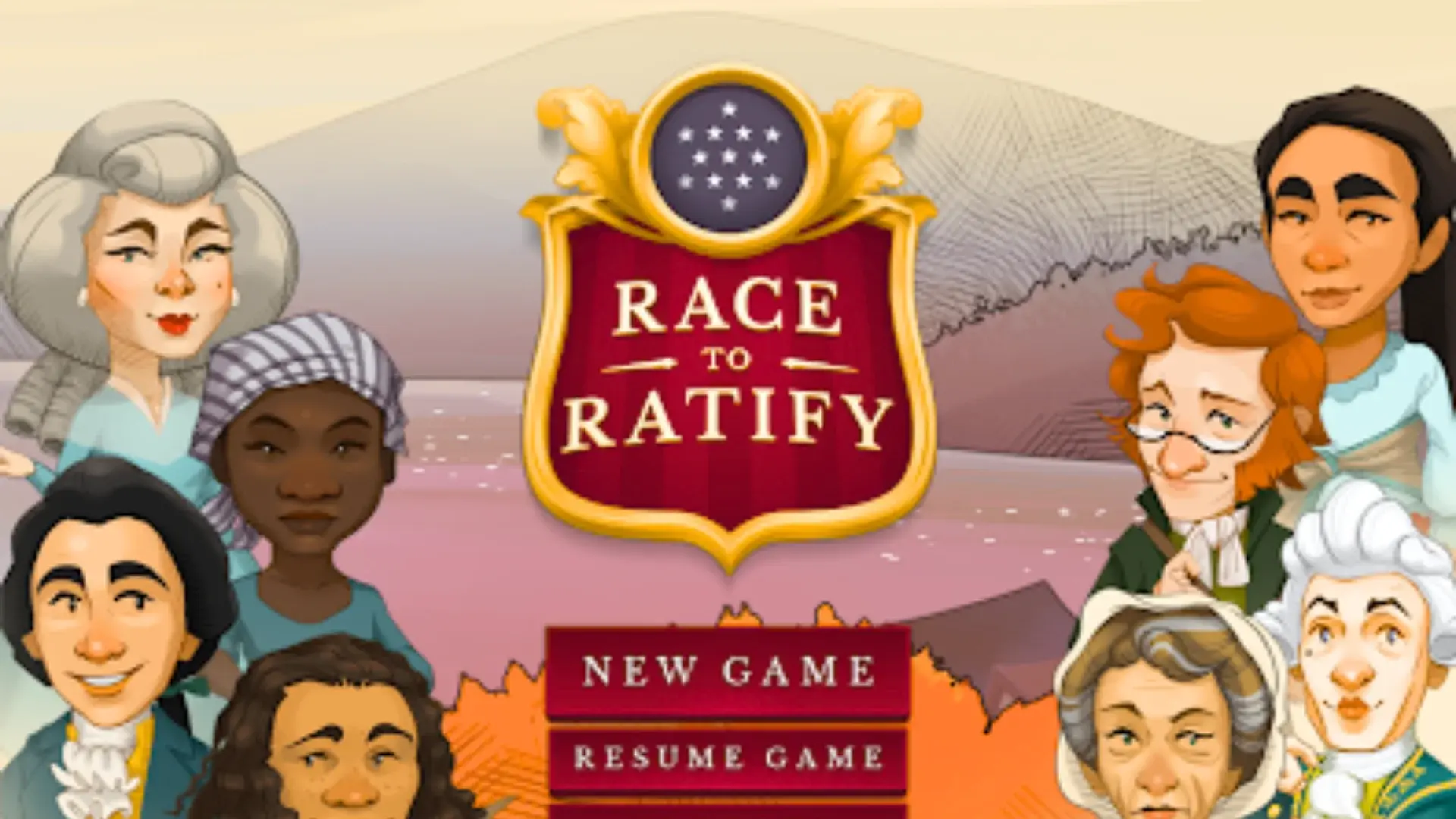
My iCivics Race to Ratify Game Review – Read Before Playing
Race to Ratify came up while I was putting together my unit on the Constitutional Convention, and I figured I’d give it a proper look before deciding whether it was worth using in class.
If you’ve used iCivics games before, you already have a rough idea of what to expect. But iCivics Race to Ratify has its own feel, and there are enough details worth going through before you commit your students to it.
Table of Contents
What Race to Ratify iCivics Is About
Race to Ratify iCivics is the game you want if you are covering the ratification debate in your U.S. History or Civics class. It is a free browser-based game made by iCivics, the same team behind titles like Do I Have a Right and Win the White House.
The game puts students in the middle of the debate over ratifying the U.S. Constitution in 1787. Students take on a role, pick a side, and travel across states trying to convince delegates to vote their way.
It’s a strategy-lite game with a lot of reading built in, and the historical content is solid for something that’s completely free.
My First Impressions Playing Race to Ratify
My first time through, I was genuinely surprised by how polished the game looks. iCivics has come a long way from some of its older titles. The artwork is clean, the map is easy to read, and it doesn’t feel like a mid-2000s Flash game.
The pacing took a little getting used to. The first few minutes are heavy on setup text before you actually start making decisions. I can see students zoning out during that part, but once the actual gameplay starts moving, it picks up fast.
The Premise Behind Race to Ratify
The developers set the game just after the Constitutional Convention of 1787. They have written the Constitution but have not ratified it yet. Students take on the role of a delegate and travel from state to state, talking to historical figures, reading pamphlets, and building a case for or against ratification.
The core tension is real and historically accurate. They did not guarantee ratification. Several states expressed serious concerns, and the Federalists and Anti-Federalists engaged in a genuinely heated debate. The game captures that tension in a way that actually works for a classroom setting.
Race to Ratify Characters and Your Journey Destinations
This is one of the parts I enjoyed. The Race to Ratify characters you meet are based on real historical figures from the ratification era. You’ll come across people like Alexander Hamilton on the Federalist side and George Mason arguing against it, along with others who had a real stake in how this turned out.
Each character has a distinct point of view, and the interviews feel grounded in what these people actually believed, at least on a surface level. You travel across a map to different states, and each one has different characters to talk to and different arguments to work through.
It’s not completely open-ended, but there’s enough variation in the choices to keep it from feeling totally on rails.
Understanding Race to Ratify Tokens
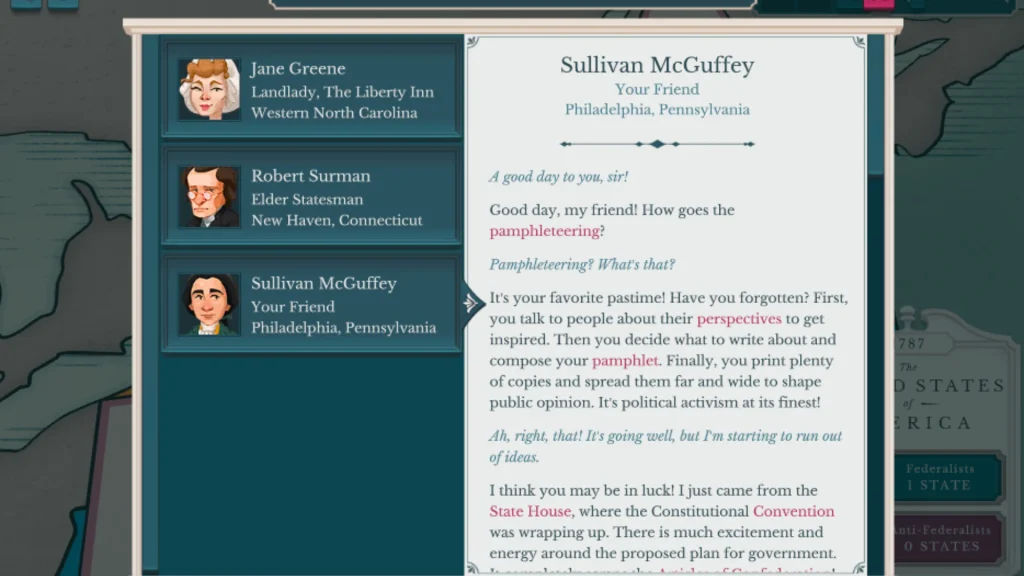
Tokens are the main resource you manage in Race to Ratify. You earn them by reading pamphlets, winning debates, and completing interviews successfully. You then spend them to travel to new states and unlock more conversations.
Think of Race to Ratify tokens as your movement currency. Run out of them and you’re stuck. Managing them well is the closest thing Race to Ratify has to actual strategy. It’s not complicated, but it does push students to think a little before clicking through everything as fast as possible.
How to Win Race to Ratify
Winning Race to Ratify comes down to a few habits that most students skip on their first run.
- Pick your side early and stick to it. Switching arguments mid-game costs you credibility points in interviews and wastes tokens.
- Read every pamphlet before entering an interview. Interview questions pull directly from pamphlet content. Going in without reading is the fastest way to lose a debate.
- Spend tokens on states where you have weak support first. Strong states can wait. Flip the harder ones while you still have enough tokens to travel.
- Do not skip the short pamphlets. Students almost always skip them because they look optional. They are not.
- Win debates, do not just complete them. A completed interview with a loss still costs you tokens on travel. Winning debates gives you tokens back.
If you are playing as a Federalist, lean hard on stability and trade arguments. If you are Anti-Federalist, the lack of a Bill of Rights is your strongest point in almost every state.
How to beat Race to Ratify Quickly?
Focus on three or four key states first rather than trying to visit everyone. Ratification only needs nine states. Hit the easiest ones first to build your token count, then tackle the harder ones.
How Pamphlets Work in the Game
Pamphlets are where most of the historical content lives. Before you can make strong arguments in interviews, you need to read the pamphlets available in each state. They’re based on real documents from the ratification debates and simplified for students.
Reading them carefully matters because interview questions pull directly from the pamphlets. Students who skip the pamphlets tend to lose debates, which costs them tokens. It’s a decent mechanic because it makes the reading feel purposeful rather than just background filler.
Teacher Resources That Come with Race to Ratify
iCivics offers two tiers of teacher resources for Race to Ratify. The basic materials are free. The extension pack is a paid add on, though the price is reasonable for what you get.
Game Guide and History Guide
The free teacher materials include a game guide and a history guide. The game guide walks you through how to play and what students will encounter at each stage. The history guide gives you background on the Federalist vs. Anti-Federalist debate so you can connect the game to your actual lessons.
Both documents are clear and well-organized. Even if you’re not deeply familiar with this particular period yourself, the history guide gives you enough to run a solid discussion afterward.
The Extension Pack with PowerPoint and Lesson Plans
The extension pack costs a small fee and includes a PowerPoint slide deck, a full lesson plan, and student handouts. The slides are presentation-ready and don’t need much editing. The lesson plan connects the game to standard curriculum objectives and includes pre-game and post-game activities.
The handouts give students something structured to do while they play, which helps a lot with focus and accountability. If you plan to use Race to Ratify more than once, the extension pack pays for itself pretty quickly.
Things I Liked About Race to Ratify
There is a lot to like here, honestly. A few things stood out after playing through it more than once and watching students use it in class.
It Breaks the Arguments Down Well
The Federalist and Anti-Federalist debate can be genuinely confusing for students who are hitting it for the first time. Race to Ratify does a good job of presenting both sides clearly without oversimplifying them to the point of being useless.
By the end of the game, students have a much clearer sense of what each side was actually arguing, and why ordinary people in 1787 might have had real doubts about ratification. That’s not easy to pull off in a game format.
The Extension Pack Actually Saves Time
I know not everyone wants to pay for extra resources, but the extension pack genuinely cuts your prep time. The slides provide solid content, the handouts are prepared for immediate use, and the lesson plan structures itself naturally within a multi-day unit.
If you’re already building out a Constitutional Convention or Bill of Rights unit, Race to Ratify fits right in without requiring a lot of extra work on your end.
Characters Are Based on Real People
This matters more than it sounds. A lot of educational games invent characters for convenience. Race to Ratify uses real historical figures, which gives teachers a natural hook to go deeper. You can pull up a primary source from Alexander Hamilton or George Mason and connect it directly to what students encountered in the game.
It makes the whole thing feel less like a standalone activity and more like part of a bigger historical conversation.
The Cast Feels Representative
Race to Ratify also includes characters who reflect a broader range of perspectives from the founding era, including women and enslaved people who were affected by ratification even if they had no vote in it. It doesn’t handle these voices perfectly, but the effort to include them is noticeable and worth pointing out to students.
Where Race to Ratify Falls Short
No game is perfect, and Race to Ratify has a few things worth knowing about before you put it in front of a full class. None of these are deal breakers, but they are worth thinking through.
It’s Reading Heavy
This is the biggest thing to know going in. Race to Ratify requires a lot of reading. The pamphlets, interview dialogues, and informational pop-ups add up quickly, and students who struggle with reading fluency or stamina will hit a wall fast.
If you have a class with mixed reading levels, plan for it ahead of time. Pairing students or walking through parts of the game as a class together can help.
Class Time Isn’t Always Clear
iCivics doesn’t give a very precise time estimate for Race to Ratify, and in practice, completion time varies a lot depending on the student. Some students finish in one 45-minute class. Others need significantly more time, especially if they’re reading carefully and thinking through their choices.
Test the game yourself first and build in some buffer time. It’s not the kind of activity where you can assume everyone finishes together.
Some Conversations Feel Scripted
This is a minor complaint, but some of the interview conversations feel like they’re reading from a script rather than representing how these historical figures actually communicated. The dialogue is accurate in terms of content, but the delivery can feel stiff at times.
Students notice this, and it can pull them out of the experience a little. It doesn’t ruin the game, but it’s something to be aware of if authenticity matters to your teaching approach.
Race to Ratify Answer Key, Should You Look for One
If you search for a Race to Ratify answer key, you’ll find a few things floating around on sites like Studocu. Most of them are student-generated notes rather than official materials, and the quality varies a lot.
iCivics doesn’t publish a traditional answer key because the game is designed to have variable paths through it. The right answers depend on which side you’re arguing and which pamphlets you read. The teacher guide includes enough context to assess student understanding without a formal answer key, and that approach honestly works better for a game-based activity anyway.
How to Get the Race to Ratify Game Certificate

Students who complete Race to Ratify and reach the ratification vote can earn an iCivics Race to Ratify game certificate. Students often search for a Race to Ratify certificate after finishing the game, and yes, it is the same thing as the in-game certificate that generates at the end. The game generates the certificate at the end, displaying the student’s name and their campaign outcome.
It’s a small thing, but students respond to it. If you want to use it as a completion incentive, just make sure students enter their real names when setting up their character at the start. There’s no way to change it once the game is underway.
Is Race to Ratify the Similar to White House
These are two completely different iCivics games. Race to the White House is about the presidential election process, campaign strategy, and the Electoral College. Race to Ratify is specifically about the 1787 constitutional ratification debate.
They share a similar feel because they’re both iCivics titles, but the content, mechanics, and historical context are entirely different. If you search for one and land on the other by accident, the topics won’t overlap at all.
Final Thoughts on Using Race to Ratify in Class
Race to Ratify is a genuinely solid game for a Constitutional Convention or Bill of Rights unit. It’s not perfect. The reading load is real, the timing is unpredictable, and some of the dialogue falls flat. But the historical grounding is strong, the teacher resources are useful, and the core debate mechanics actually teach something worth teaching.
If your students are comfortable readers and you have a day or two to give it, Race to Ratify is worth the class time. If your class struggles with reading-heavy activities, consider running through parts of the game together as a group rather than handing it off entirely. And if you have business mind connect IBWays community to get the perfect idea for your business.
Either way, it’s free to play and the basic teacher materials are free too. There’s not much risk in trying it yourself first before you decide.
