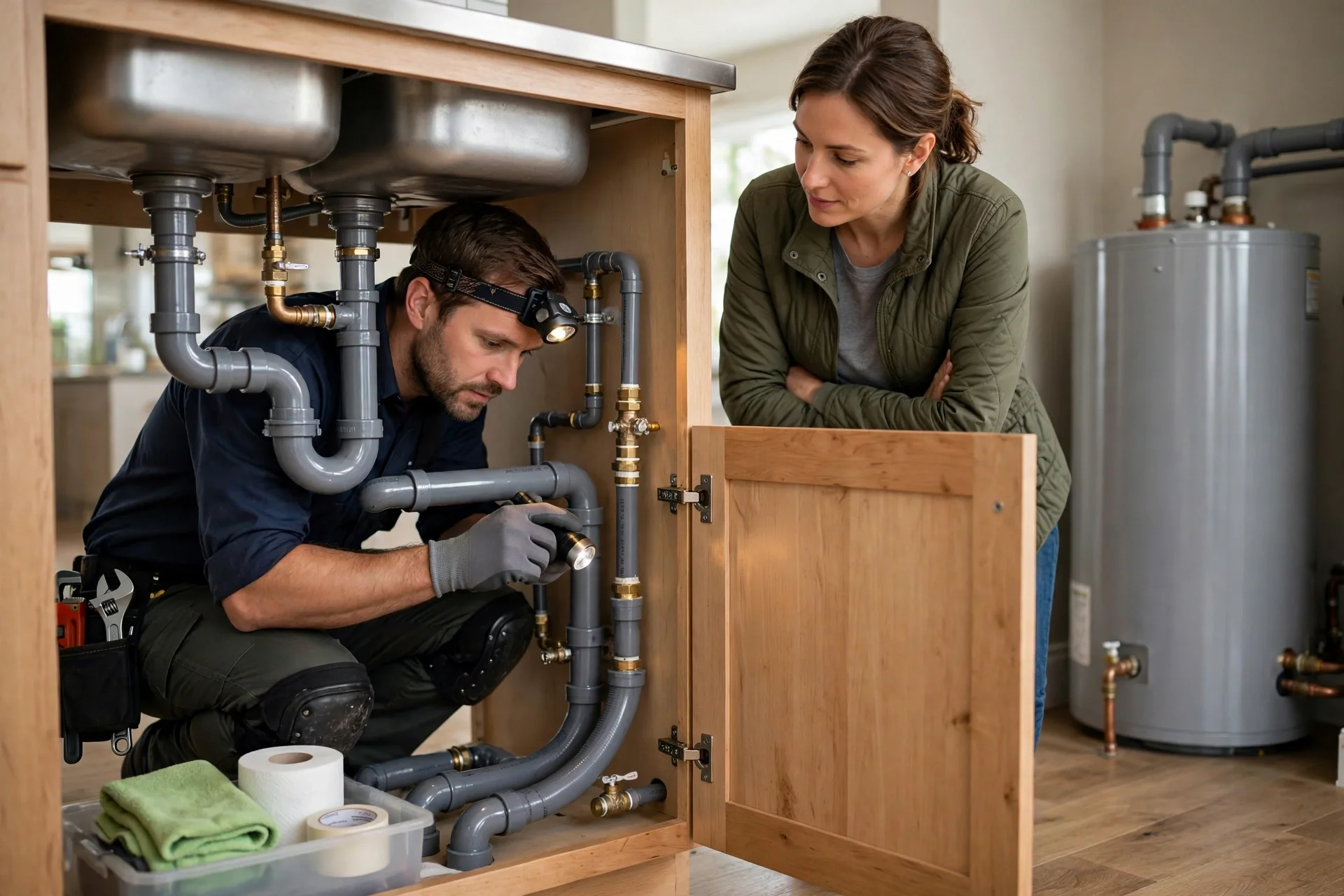
Polybutylene Pipe 2026 Guide for Smart Buyers and Owners
Polybutylene pipe is a gray, flexible plastic water supply pipe installed in an estimated 6 to 10 million U.S. homes between 1978 and 1995. It matters because the pipe can crack from the inside and leak or burst without warning. Many insurers restrict coverage, and the only lasting fix is replacement. If your home was built in that window, check your pipes now.
This guide answers the questions homeowners, buyers, and sellers ask most. You will see how to identify polybutylene pipe, what replacement costs in 2026, what happened with the lawsuit, and what to do before you buy or sell. Facts link to trusted sources, and where sources disagree, we say so.
Quick Answer in Five Lines
- Polybutylene pipe is gray plastic water pipe used in homes from 1978 to 1995.
- It can crack from the inside and leak or burst without warning.
- Check for the PB2110 stamp near the water heater, under sinks, and at the water meter.
- Many insurers restrict coverage, and the main lawsuit claims window closed in 2009.
- Replacement is the lasting fix, and many whole house repipes land near $4,000 to $15,000.
Table of Contents
What Is Polybutylene Pipe? And how to Identify?
Polybutylene pipe, also called PB pipe, poly pipe, or Poly B, is a plastic water supply pipe made from polybutylene resin. Builders used it for hot and cold water lines in homes from the late 1970s until the mid 1990s. It was never used for drain, waste, or vent lines.
| Fast fact | Detail |
|---|---|
| Also called | PB pipe, poly pipe, Poly B, polybutylene plumbing, and the brand names Quest or Qest |
| Made from | Polybutylene plastic resin |
| Installed | From 1978 to mid 1995 in up to 10 million U.S. homes, according to InterNACHI polybutylene guide |
| Used for | Hot and cold water supply lines in homes, apartments and manufactured homes |
| Never used for | Drain, waste or vent pipes |
| Production | Ended in mid 1996 after many reports of ruptures and water damage |
| Age in 2026 | Between 31 and 48 years old |
Builders liked it for simple reasons. It was cheap, flexible, quick to install, and it handled freezing better than rigid pipe. Quest piping in an old inspection report means the same risk. You can no longer buy it for new U.S. homes, so the homes to check are those built or repiped from 1978 to 1995.
How to Identify Polybutylene Pipe
Any gray plumbing pipe in an older home deserves a closer look. Use this five step check.
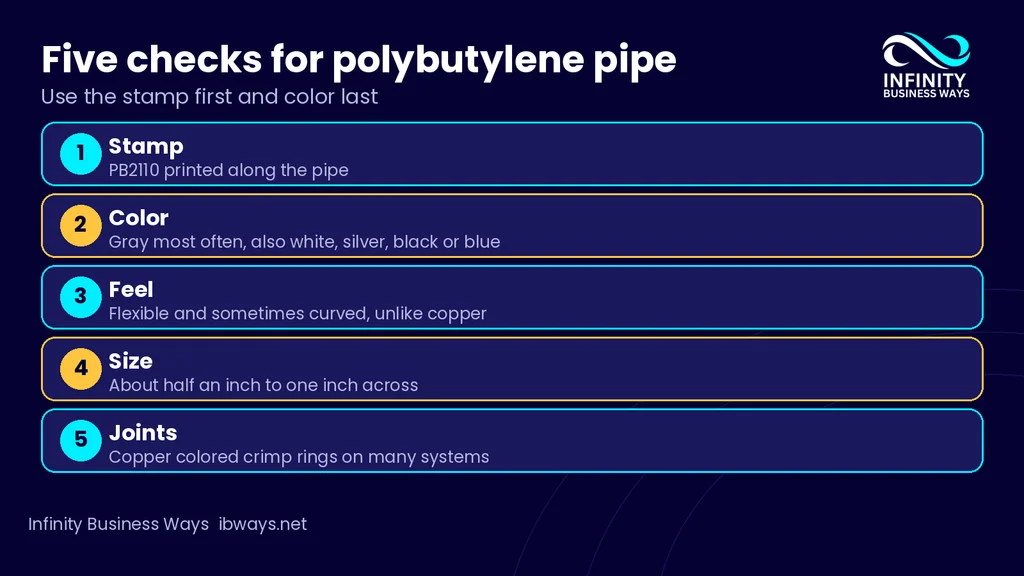
- Find the stamp. The code PB2110 is the classic marking, according to InterNACHI.
- Check the color. Gray is most common indoors. It also came in white, silver, black, and blue. Blue is mostly used outdoors for cold water.
- Test the feel. PB is flexible and sometimes curved, unlike rigid copper.
- Check the size. Residential PB runs about half an inch to one inch across.
- Inspect the joints. The Plastics Pipe Institute says PB crimp rings are usually copper in color, while PEX rings usually have a black coating.
Look near the water heater, under sinks, behind toilets, in basements and crawl spaces, at the water meter, and at the main shutoff valve. Some warm climate homes run lines through the attic.
Beware of look alikes. Color alone proves nothing, so rely on the stamp and a plumber.
| Pipe | What it looks like | Why it is not proof of PB |
|---|---|---|
| Polyethylene | Flexible and black | Black is also a PB color, so check the stamp |
| PVC or CPVC | White or off white, rigid or flexible | PB is rarely white |
| PEX | Red, blue or black and very flexible | Different material with thicker walls and different fittings |
| Copper | Rigid metal | Never confused with plastic, though PB can hide behind copper stub outs |
Check the whole system too. InterNACHI warns that PB is sometimes used at joints, such as where it meets copper stub outs, in a system that looks like copper. If the stamp is faded or hidden, a licensed plumber can trace the line. Ask about the underground line from the street as well. Blue polybutylene pipe is often used outdoors, and a repipe quote that skips it can leave risk in the ground.
Why Polybutylene Pipe Fails
Experts agree on the big picture, though not on every detail.
The Plastics Pipe Institute report says some PB systems showed early brittle failures by the 1980s. It ties many failures to plastic polyacetal fittings and says some tubing failed because it could not resist hot chlorinated water. No standard test for that existed at the time.
In plain terms, chlorine and similar disinfectants in city water slowly attack the plastic. The surface scales and flakes, tiny cracks form, and they deepen. Because this happens inside the pipe wall, the outside can look fine until it fails.
Three things raise the risk.
- Age. Every polybutylene system is now at least 31 years old.
- Joints. Fittings are a common weak spot, although some manufacturers argue that poor installation caused many leaks.
- Hidden runs. Pipes behind walls can leak for a long time, which leads to mold and rot.
One contractor shares data from its own jobs. SageWater project data reports that 148 apartment properties with poly pipe were failing at 28.4 years on average, against 34.5 years across all pipe types it reviewed. That is one company’s sample, so treat it as a clue and not a promise.
Some owners say they have “good poly” that never leaked. SageWater notes these systems often run on well water but still sit past their useful life. A dry pipe today says little about next year.
Is Polybutylene Pipe Still Legal and Is the Water Safe?
New PB plumbing is no longer allowed in the U.S. or Canada. The Plastics Pipe Institute says the ASTM standard for PB tubing was withdrawn in 2010, and the material has since been removed from plumbing and mechanical codes in both countries. PB is still used in other parts of the world under a different standard, so a foreign product page tells a different story.
Existing pipe is another matter. InterNACHI notes that no regulation requires replacement, yet many plumbers recommend it. In practice, insurers, lenders, and buyers force the decision.
On water quality, the documented problem is structural failure, meaning leaks and bursts. If you see flakes or particles, or you worry about taste, ask your water utility or a certified lab about testing.
Warning Signs of a Failing System
Polybutylene often fails with little warning, but these signs can show up first.
- Water stains on ceilings, walls, or around fixtures
- Damp or bubbling drywall, or a musty smell
- A sudden drop in water pressure
- Flakes or particles caught in faucet screens
- Drips under sinks or wet spots near the water heater
- A higher water bill with no change in use
Try a simple meter test. Turn off every tap and appliance, record the meter reading, wait an hour, and check again. If the reading moved, water is escaping somewhere.
Until you repipe, a few habits limit damage. Know where the main shutoff is and how it works. Check the water heater area and accessible fittings monthly. Ask a plumber about leak sensors or an automatic shutoff valve. Turn the water off when you travel. These steps reduce harm. They do not make the system safe.
What Happened With the Polybutylene Pipe Lawsuit?
The biggest case was Cox v. Shell Oil. Homeowners sued Shell Oil and Hoechst Celanese, claiming PB plumbing was defective.
| Cox v. Shell Oil | Detail |
|---|---|
| Defendants | Shell Oil and Hoechst Celanese, among others |
| Settlement size | The Cox settlement notice describes $1.103 billion. Some sources cite an earlier $950 million figure |
| Claims deadline | May 1, 2009 according to the notice |
| Status today | A legal claims overview says no national class action is accepting new claims |
Construction defect claims also face time limits called statutes of repose, which run from the date the house was finished. For many homes from the 1980s and early 1990s they have likely expired. Rules vary by state, so ask an attorney if you think you have a claim. This guide is not legal advice. Plan to pay for a repipe yourself.
Polybutylene Pipe and Home Insurance
Insurers treat PB as a high water damage risk, and responses vary. Some decline new policies, some charge more, some exclude water damage from the pipes, and some write the policy normally. Ask before you rely on coverage.
Florida shows the problem clearly. Searches for polybutylene pipes in Florida are common because the state’s four point inspection asks the inspector to name the pipe material. A Florida four point checklist lists PB among frequent red flags that can lead to denial, required repairs, higher premiums, or nonrenewal. In 2023, an NBC Miami report quoted Citizens, Florida’s insurer of last resort, saying it does not insure properties with polybutylene piping. Confirm current rules with an agent.
Take these steps.
- Ask an independent agent three things. Will you cover a home with confirmed PB supply pipe? What exclusions apply? Do you require repiping by a set date?
- If you are buying, get quotes before your inspection period ends.
- Keep your four point report and any repipe invoice for renewals.
- Do not expect insurance to pay for the pipes. Most policies cover sudden damage, not replacing the pipe itself.
Should I Buy a House With Polybutylene Pipe?
You can, but only if price, insurance, and a repipe plan all work together. Many buyers do it successfully. Follow this order.
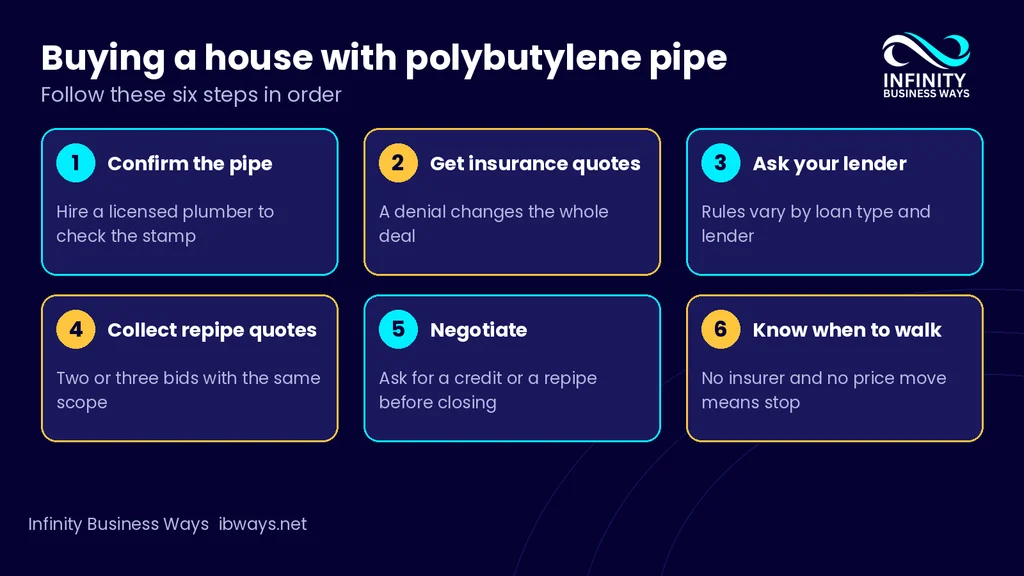
- Confirm the pipe. Hire a licensed plumber. InterNACHI says inspectors are not required to report PB and cannot see inside the pipe.
- Get insurance quotes. A denial changes the whole deal.
- Ask your lender early. Rules vary. Conventional lenders often have no PB rule, while VA and FHA appraisers focus on working plumbing with no active leaks.
- Collect two or three repipe quotes with the same scope.
- Negotiate. Ask for a price credit, a repipe before closing, or seller paid funds held in escrow.
- Walk away if the seller will not move and no insurer will cover the home.
Here is an example. A house lists at $300,000 and three quotes average $9,000. A $9,000 credit lets you repipe after closing. If your insurer will not bind coverage until the pipes are replaced, ask the seller to finish the repipe before closing instead.
Selling a House With Polybutylene Pipe
You can sell it, and disclosure matters. Most states require sellers to disclose known material defects, and many forms ask about polybutylene directly. Check your state form and ask an agent or attorney. Hiding known PB can lead to legal trouble.
| Option | Upside | Downside |
|---|---|---|
| Repipe before listing | Smoother sale and wider buyer pool | Highest upfront cost |
| Offer a credit | Keeps cash in your pocket until closing | Buyers want a written quote to trust the number |
| Sell as is | Fastest and simplest | Lower offers and fewer buyers, since some cannot get insurance |
A plumbing inspection and written quote before listing saves time in negotiation.
Polybutylene Pipe Replacement Options
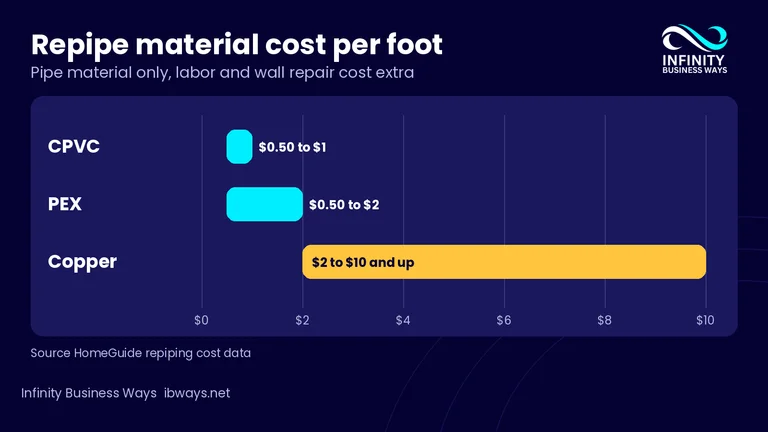
Three materials dominate repiping. Prices below cover pipe material only, according to HomeGuide repiping cost data.
| Material | Cost per linear foot | Strengths | Watch for |
|---|---|---|---|
| PEX | $0.50 to $2 | Flexible, usually the budget friendly choice | Follow local code and keep it out of direct sunlight |
| Copper | $2 to $10 or more | Lasts a long time | Costs more in material and labor |
| CPVC | $0.50 to $1 | Lowest material cost | Rigid, and some contractors warn about brittleness over time |
Polybutylene Pipe vs PEX
On polybutylene pipe vs PEX, the difference is real. PEX is not polybutylene. These points come from the Plastics Pipe Institute report.
| Feature | Polybutylene | PEX |
|---|---|---|
| Crosslinked material | No | Yes |
| Wall thickness | SDR 11 | SDR 9, with walls up to 22% thicker |
| Chlorine resistance testing | No standard test existed in the 1980s and 1990s | Required, with a minimum extrapolated life of 50 years under test conditions |
| Insert fittings | Polyacetal fittings were common | Not used |
| Code status in U.S. and Canada | Removed from codes | Approved in model codes |
PB and PEX crimp rings and insert fittings are not interchangeable. Always follow local code and the manufacturer’s instructions.
Polybutylene Pipe Replacement Cost in 2026
Guides disagree, so use ranges.
| Source | Range | Note |
|---|---|---|
| HomeGuide | $1,500 to $15,000 | Depends on home size, amount of pipe and material. Single fixture work runs $100 to $350 |
| PatchMaster cost range | $2,500 to $20,000 | Depends on fixtures, home size and wall repair |
| Angi cost guide | $300 to $5,100 | Average near $1,200, which likely includes small partial jobs |
For planning, most whole house repipes in current guides land between about $4,000 and $15,000. Large homes and hard to reach pipes cost more.
| Price driver | Why it matters |
|---|---|
| Size and fixtures | Many contractors price per fixture |
| Access | Homes with a crawl space or open basement cost less |
| Material | Copper costs more than PEX or CPVC |
| Wall repair | Crews open small holes that need patching and paint |
| Permits and inspections | Local rules add fees and time |
| Yard service line | Adds cost if the underground line is included |
Ask each bidder whether drywall repair and paint are in the price. Expect the work to take from a few days to a week or more.
Can You Repair Polybutylene Pipe Instead?
A small repair can stop a leak, but it does not fix the system. Push to connect conversion couplings can join PB to PEX, copper, or CPVC. A SharkBite coupling product page says the coupling is approved behind walls without access panels. Retailer notes say to use such fittings only on sound PB, not damaged or decaying pipe.
Treat repairs as a bridge. If one section fails, others often follow. Let a licensed plumber do or approve the work, because local code and insurance rules may apply. Polybutylene pipe fittings of any kind do not remove the age risk.
Who to Hire for Each Need
Match the professional to your goal.
| Your intent | Best fit | Ask for |
|---|---|---|
| Confirm the pipe type | Licensed plumber or certified home inspector | Photos of the stamp and a written note |
| Replace the system | Licensed plumbing contractor or repipe specialist | License number, proof of insurance, permit handling, per fixture pricing, drywall plan, timeline and written warranty |
| Keep or get coverage | Independent insurance agent in your state | Written answers on exclusions and repipe deadlines |
| Buy or sell | Real estate agent and attorney | Disclosure form guidance |
| Fix walls afterward | Drywall or restoration contractor | Patch, texture and paint in the quote |
Get at least three written bids and verify each license with your state board. See also our residential contractors and services guide.
Common Mistakes to Avoid
- Trusting color alone instead of the stamp
- Assuming metal fittings make the system safe, since InterNACHI says disinfectants can attack PB at any point in the system
- Waiting for the first leak
- Skipping the insurance call
- Counting on lawsuit money
- Choosing a contractor on price alone
Final Thoughts on Polybutylene Pipe
Polybutylene pipe was cheap and popular, and it left millions of homes with a plumbing problem on a timer. Every system is now decades old, the lawsuit money is gone, and insurers keep tightening. That makes a clear plan more useful than hope.
Start by checking the stamp. Call your insurer. Get three written repipe quotes. If you are buying, use those numbers to negotiate. If you are selling, disclose honestly and show a quote. Acting before the first leak is almost always cheaper than cleaning up after one.
FAQs
What does polybutylene pipe look like?
It is flexible plastic tubing, most often gray, about half an inch to one inch wide, and usually stamped PB2110. It can also be white, silver, black, or blue. Blue is common outdoors. Color alone is not proof, so check the stamp and ask a plumber.
Is polybutylene pipe still used?
There is no fixed lifespan. Some systems lasted decades while others failed much sooner. Every system is now at least 31 years old, and one contractor reported failures at 28.4 years on average in its apartment sample. Plan for replacement instead of waiting.
How long does polybutylene pipe last?
There is no fixed lifespan. Some systems lasted decades while others failed much sooner. Every system is now at least 31 years old, and one contractor reported failures at 28.4 years on average in its apartment sample. Plan for replacement instead of waiting.
Is water from polybutylene pipe safe to drink?
The documented problem is leaks and bursts, not a proven health effect. If you notice flakes, odd taste, or discoloration, ask your water utility or a certified lab for testing. A plumber can check the pipe condition.
Does homeowners insurance cover polybutylene pipe?
It depends on the insurer and state. Some decline coverage, some charge more, and some exclude water damage from the pipes. Most policies do not pay to replace the pipe itself. Ask an independent agent before you buy or renew.
Can you still file a polybutylene pipe lawsuit?
The Cox v. Shell Oil claims deadline was May 1, 2009, and no national class action is open today. Other claims face time limits that have likely expired for older homes. Rules vary, so ask an attorney. This is not legal advice.
Is PEX better than polybutylene pipe?
PEX is the common replacement, and it is not the same material. It has thicker walls, must pass chlorine resistance testing, and does not use polyacetal insert fittings. Proper installation and local code compliance still matter.
How much does it cost to replace polybutylene pipes?
Many whole house repipes fall between about $4,000 and $15,000, though guides range from a few hundred dollars for partial work to $20,000 or more. Home size, fixtures, access, and material drive the price. Get three written quotes.