Electric Furnace Installation Cost 2026 and Checklist Plan
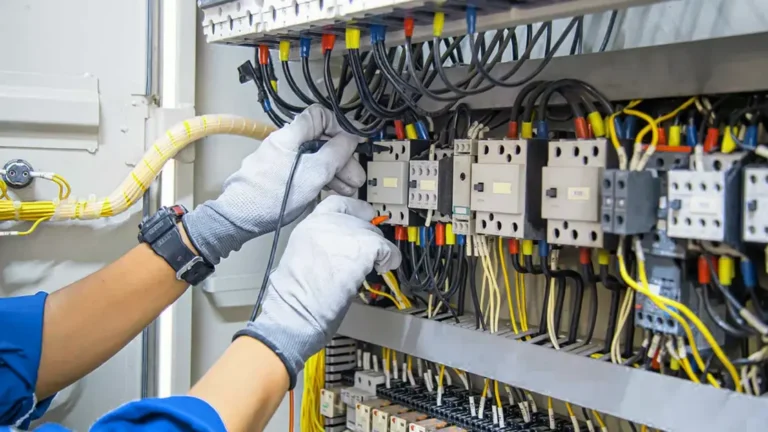
Electric furnace installation is the process of placing a forced air electric furnace in a home, connecting it to the ductwork and a dedicated 240 volt circuit, wiring the thermostat and passing inspection. A licensed HVAC contractor and electrician usually do the work under a permit.
Quick Answer
Most electric furnace installations cost $2,247 to $8,116, and about $5,148 is the most common total. Expect 4 to 8 hours of work, a dedicated 240 volt circuit sized at 125 percent of the heater load, a disconnect within sight of the unit and a permit. A 10 kW furnace, for example, draws about 42 amps and normally needs a 60 amp breaker.
Cold weather is when homeowners start asking about electric furnaces, and the questions are rarely about the furnace alone. They are about the price, the circuit, the permit and whether a heat pump would be smarter. Here you will answer each one with named sources and shows where the electrical work ends and the HVAC work begins. It is written for US homeowners.
Table of Contents
What Is an Electric Furnace and How Does It Work?
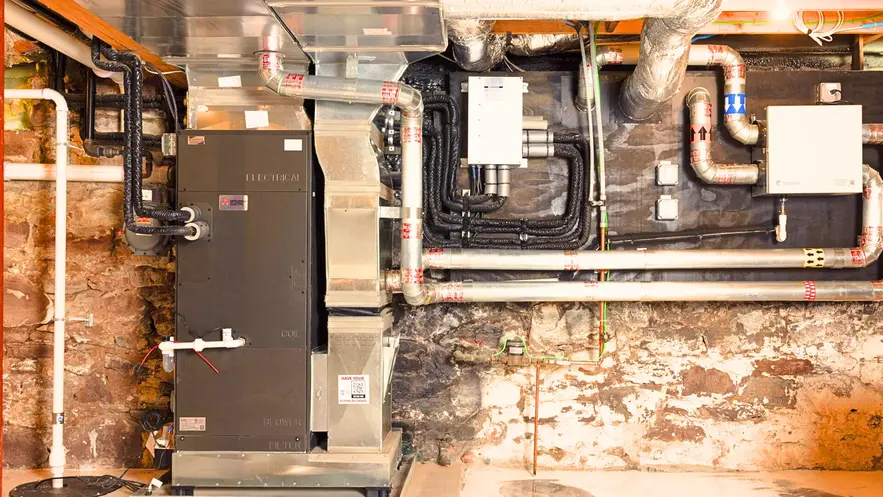
An electric furnace heats air with resistance elements instead of burning fuel. A blower pushes household air over the elements and sends it through the ducts. There is no flame, flue or gas line, which makes installation simpler than a gas furnace, but the electrical load is large.
The Department of Energy explains that a furnace holds three to seven elements, each usually rated near five kilowatts, and that resistance heat turns all incoming electricity into heat. Furnaces still cost more to run than other resistance systems because of duct heat losses.
Main parts of an electric furnace
- Heating elements, also called heat strips
- Blower and motor
- Control board and safety limits
- Thermostat and low voltage wiring
- Ductwork connections
- Dedicated 240 volt circuit with a disconnect
How Much Does Electric Furnace Installation Cost in 2026?
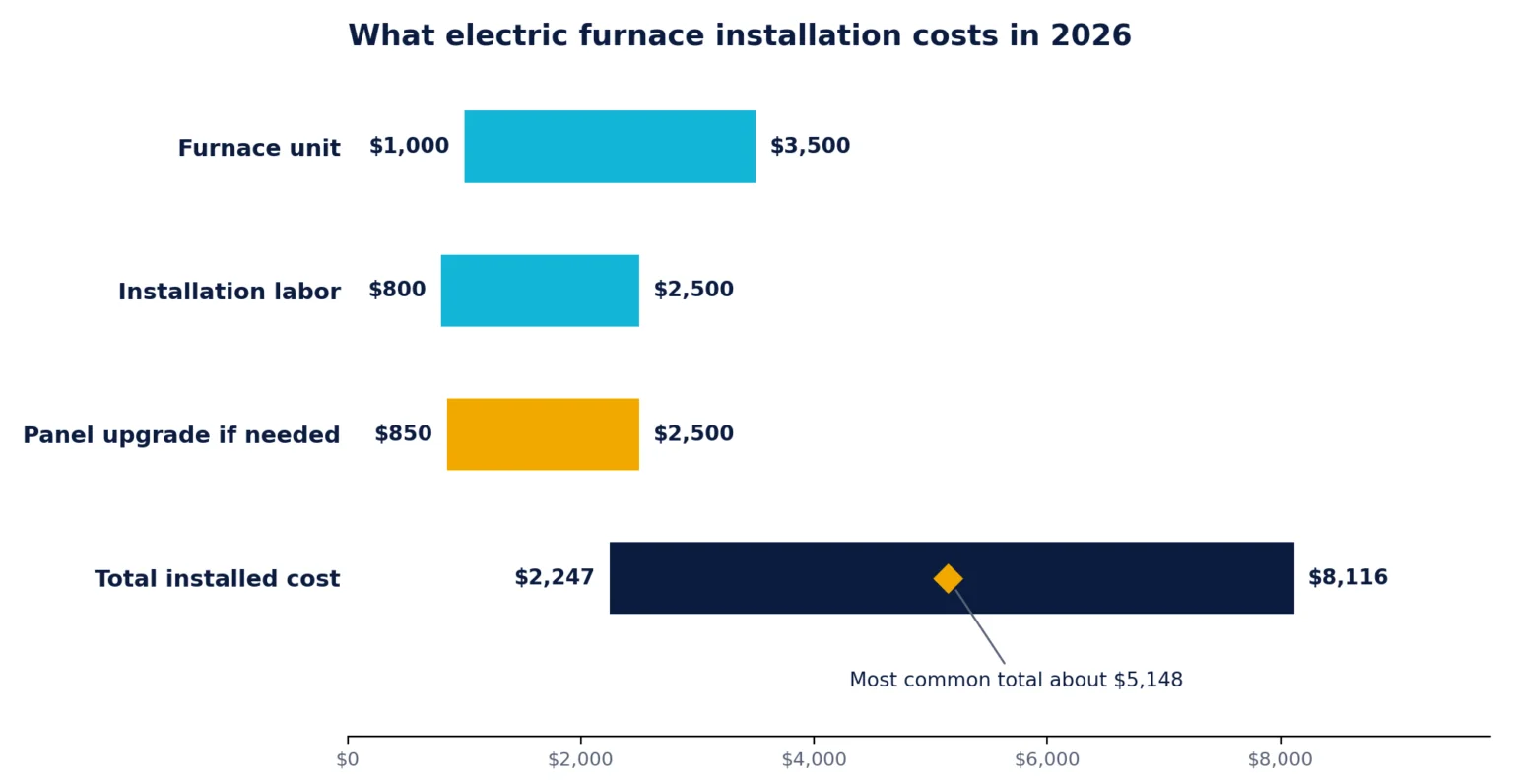
Electric furnace installation usually costs $2,247 to $8,116, and about $5,148 is the most common total, according to Angi electric furnace costs. HomeGuide electric furnace costs put the unit at $1,000 to $3,500 and installation labor at roughly $600 to $2,500. Sources differ because they sample different projects, so treat these as ranges and gather written quotes.
| Item | Typical 2026 range | Source basis |
|---|---|---|
| Total installed cost | $2,247 to $8,116, most common about $5,148 | Angi |
| Average installed cost | $1,900 to $5,600, national average $3,750 | HomeGuide |
| Furnace unit | $1,000 to $3,500 | HomeGuide |
| Labor for a new install | $800 to $2,500 or $600 to $2,300 | Angi, HomeGuide |
| Labor for a replacement | $300 to $800 or $750 to $2,500 | Angi, HomeGuide |
| Hourly labor | $50 to $150 | Angi |
| Panel upgrade if needed | $850 to $2,500 or $1,200 to $2,000 | HomeGuide, Angi |
| Gas to electric conversion | Unit $600 to $2,600 plus labor $600 to $2,500 | HomeGuide |
What changes the price of electric furnace installation?
- Furnace size in kilowatts and the size of the home
- New installation or replacement, since Angi says a new install costs about three times a replacement and takes two to three times longer
- Ductwork condition and any changes
- Electrical capacity, including the wire run, breaker and panel
- Permit fees and local labor rates
- Brand, blower type and staging features
How Much Does an Electric Furnace Cost to Run?
Electric heat costs the kilowatts used times the hours run times your rate. A 10 kW furnace at full output for one hour uses 10 kilowatt hours, which costs $1.70 at $0.17 per kilowatt hour, the rate mentioned by PickHVAC electric versus gas comaprison.
Real bills are lower because elements stage on and off, but the math shows why running cost matters more than the purchase price. Check your own rate on your utility bill. HomeAdvisor tells that electric furnaces last about 20 to 30 years, so the running cost adds up over a long life.
What Electrical Work Does an Electric Furnace Need?
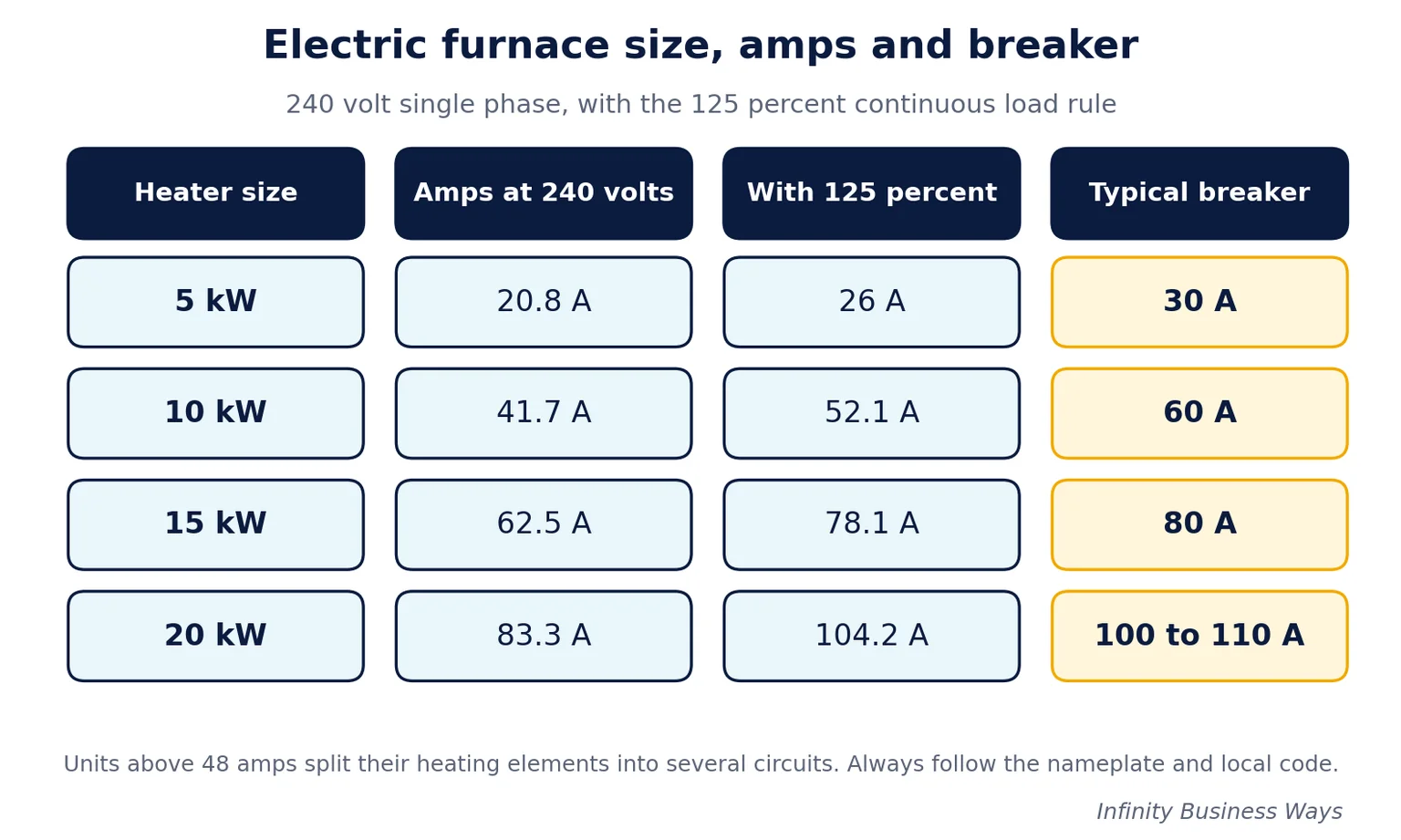
An electric furnace needs its own 240 volt circuit. NEC 422.12 calls for an individual branch circuit for central heating equipment, and a disconnect within sight of the unit is standard. Electric heat counts as a continuous load, so the circuit is sized at 125 percent of the heater load.
| Heater size | Amps at 240 volts | With 125 percent | Typical breaker |
|---|---|---|---|
| 5 kW | 20.8 A | 26 A | 30 A |
| 10 kW | 41.7 A | 52.1 A | 60 A |
| 15 kW | 62.5 A | 78.1 A | 80 A |
| 20 kW | 83.3 A | 104.2 A | 100 to 110 A |
A 10 kW furnace draws 41.7 amps. With the 125 percent rule that becomes 52.1 amps, so the next standard breaker is 60 amps, typically with 6 AWG copper. The Furnace Outlet also shows the same pattern for other sizes. Twenty kilowatt units land at 100 or 110 amps depending on the source, so the nameplate decides.
Large furnaces are split into several circuits. NEC 424.22(B) requires equipment rated above 48 amps to subdivide its elements so no circuit exceeds 48 amps, as quoted on the Mike Holt NEC forum. That is why a 15 or 20 kW furnace often has two or more breakers. The minimum circuit ampacity and maximum overcurrent protection printed on the nameplate set the final sizes.
Will my electrical panel handle an electric furnace?
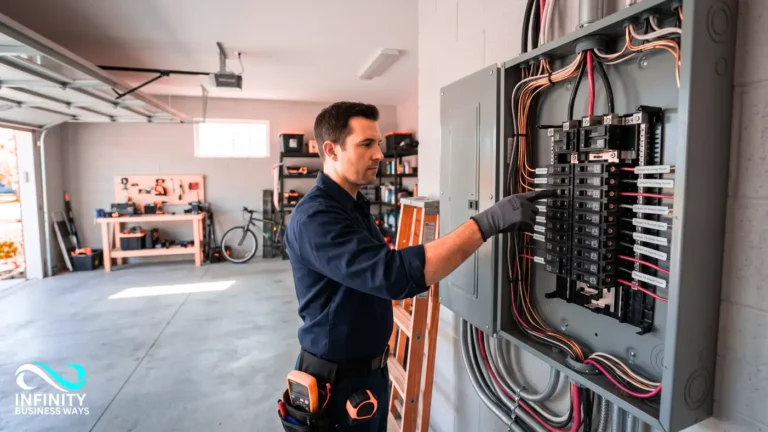
A 20 kW furnace draws about 83 amps at 240 volts. On a 100 amp service that already runs a range, dryer and air conditioner, that may not fit, so an electrician runs a load calculation before quoting. Wire sizes, grounding and panel basics are covered in our electrical installation guide.
Who Installs an Electric Furnace and Do You Need a Permit?
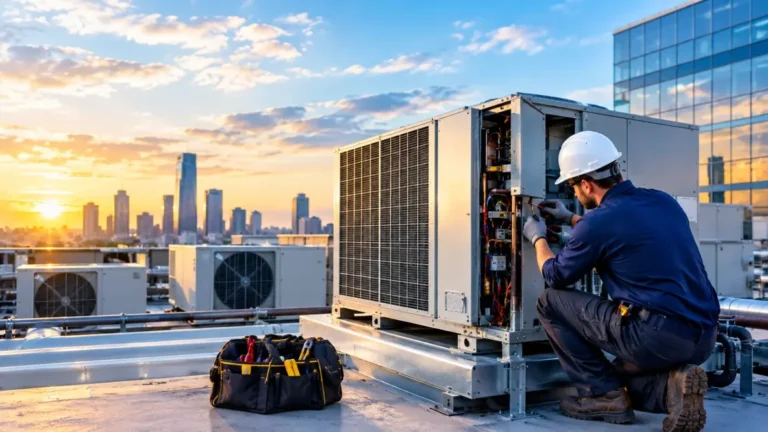
A licensed HVAC contractor sets the furnace and connects the ducts, and a licensed electrician installs the circuit and disconnect. Many HVAC companies handle both under one contract. Almost every installation needs a mechanical permit and an electrical permit, and cities such as Mountain View require a permit for all furnace installations and replacements, as shown by Mountain View. Some cities add extras such as a nearby 120 volt service outlet.
Do not treat this as a weekend project. Angi advises hiring a professional because of shock and burn risks, and many manufacturer instruction sheets warn that installation by an unqualified person can void the warranty.
IBWays Checklist
Run the IBWays Pre Hire Check on every bid. Verify the license, get the insurance certificate from the insurer, request a written scope, confirm who pulls the permit and compare three itemized quotes.
What Size Electric Furnace Does a Home Need?
Size depends on square footage, insulation and climate, and a load calculation gives the final answer. As a rough guide, Forbes Home furnace lists these sizes.
| Home size | Furnace size | Note |
|---|---|---|
| About 500 sq ft | 5 kW | Small homes and apartments |
| 500 to 1,000 sq ft | 10 kW | Cold climates need more |
| 1,000 to 1,500 sq ft | 15 kW | Insulation changes the result |
| 1,500 to 2,000 sq ft | 20 kW | Often split across circuits |
| 2,000 to 2,500 sq ft | 25 kW | Check panel capacity |
| 2,500 to 3,000 sq ft | 30 kW | Needs a load calculation |
How Is an Electric Furnace Installed Step by Step?
A standard installation follows eight steps. The core tasks are removing the old unit, mounting the cabinet, sealing the plenums to the ducts, running the 240 volt hookup with a disconnect, wiring the thermostat and verifying airflow and temperature rise.
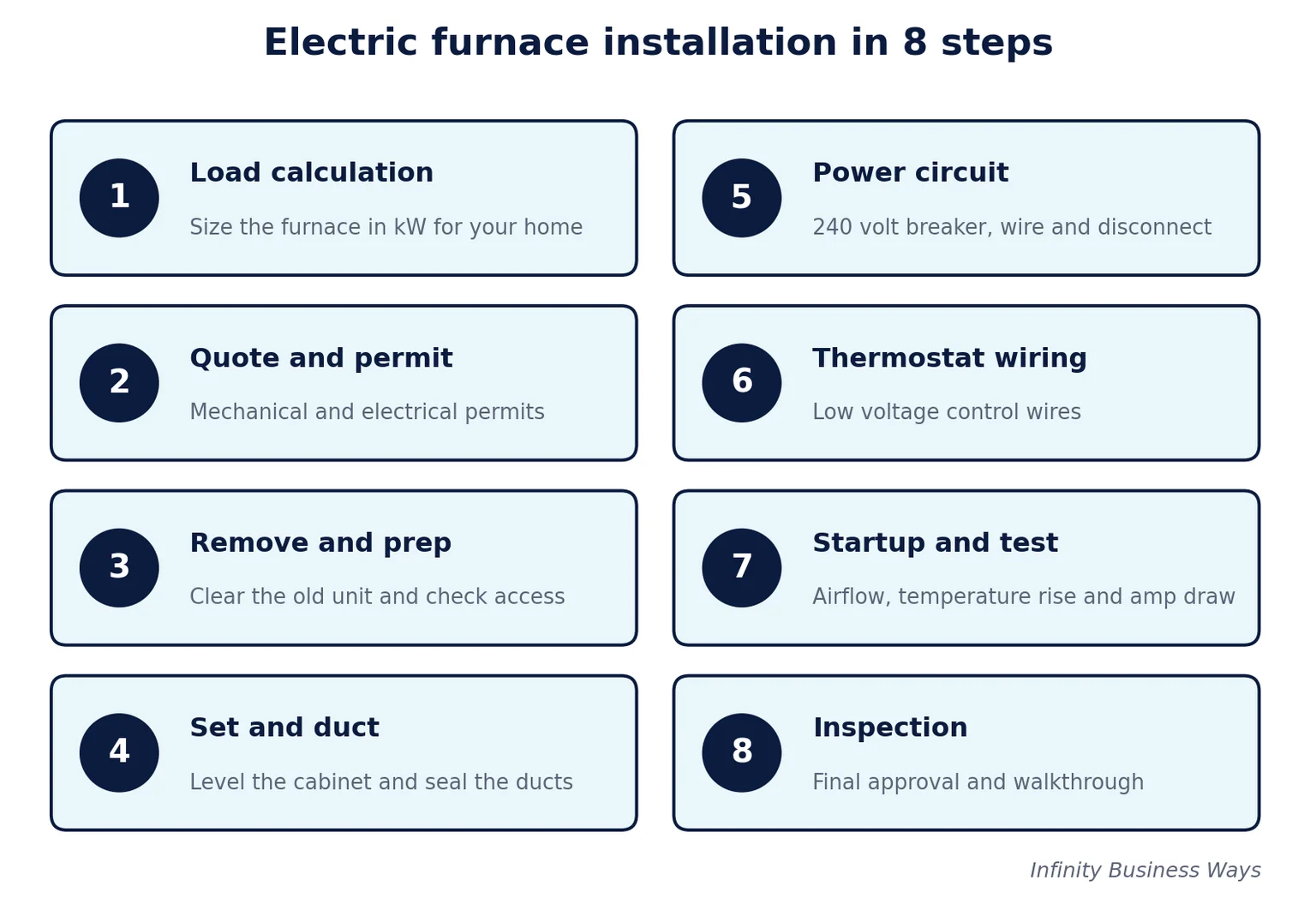
- Load calculation. The contractor sizes the furnace in kilowatts from the home size, insulation and climate.
- Quote and permits. You sign a written scope and the contractor files the mechanical and electrical permits.
- Removal and prep. The old unit is removed and the location and ducts are checked.
- Set and duct. The cabinet is leveled and the supply and return plenums are sealed to the ducts.
- Power circuit. The electrician runs the 240 volt wire, sets the breaker and installs the disconnect.
- Thermostat wiring. Low voltage control wires connect the thermostat to the furnace.
- Startup and test. The crew verifies airflow, temperature rise and amp draw.
- Inspection. The inspector approves the work and you receive a walkthrough and warranty paperwork.
This is an overview for homeowners and not a do it yourself manual.
Electric Furnace vs Heat Pump vs Gas Furnace
Electric furnaces are the cheapest to install but usually the most expensive to run. The Department of Energy says heat pumps can cut electricity use by about 50 percent compared with electric resistance heat in most climates and gas heat costs far less per unit of heat at typical US rates.
| Option | Upfront cost | Running cost | Best for |
|---|---|---|---|
| Electric furnace | Lowest, $2,247 to $8,116 installed | Highest in most areas | No gas service, mild winters, additions, backup heat |
| Ducted heat pump | About $8,000 to $15,000 | About half the electricity of resistance heat | Most climates, heating and cooling in one system |
| Gas furnace | About $3,500 to $7,500 installed for a standard unit | Lowest per unit of heat at typical rates | Homes with gas service and cold winters |
Prices for the heat pump come from the PickHVAC heat pump comparison and gas furnace prices from HomeGuide. The federal 25C credit for heat pumps ended for equipment placed in service after 31 December 2025, so check state and utility rebates.
When does an electric furnace make sense?
- Your home has no gas service
- Heating seasons are short and mild
- You are heating an addition where extending the system is impractical
- You need a low upfront cost or a backup source
Electric Furnace Quote Elements and Pre Hire Checklist
- Furnace brand, model and kW rating
- The sizing basis, such as a load calculation
- Ductwork changes, if any
- The new circuit, wire size, breaker size and disconnect
- Permits and inspection fees
- Thermostat and control wiring
- Removal of the old unit
- Equipment and labor warranty terms
Red flags in an electric furnace quote
- No load calculation or a size picked by guess
- No mention of permits
- A vague scope with no breaker size
- A request for cash or a large deposit
- No license or insurance proof
When you search for residential electrical contractor or electric furnace installers near me, shortlist three licensed companies and compare their written quotes line by line. You can also
Before Winter Checklist
- Check that the breaker label matches the furnace nameplate
- Replace the filter as the maker advises
- Clear vents and returns
- Test the thermostat before the first cold night
- Book installation early, since crews fill up when cold weather hits
Electric Furnace Installation Pre Hire Checklist
- Contractor active license status verification
- General liability insurance certificate proof
- Residential heating load calculations check
- Main electrical panel open capacity validation
- Dedicated 240 volt circuit line confirmation
- Manufacturer nameplate breaker size match
- Municipal electrical permit handling agreement
- Plenum seals ductwork inspection confirmation
- Itemized material labor pricing breakdown
- Milestone progress base payment schedule
- Final building inspector pass authorization
- Written workmanship labor warranty guarantee
Common Electric Furnace Installation Mistakes
- Using an undersized breaker or wire
- Ignoring panel capacity
- Skipping the permit
- Choosing furnace size by guess
- Comparing only the purchase price and not running costs
- Hiring without checking the license and insurance
Final Words on Electric Furnace Installation
An electric furnace is simple, quiet and cheap to install, but it asks a lot from your electrical system and your utility bill. Size it with a load calculation, confirm the circuit and panel capacity, insist on a permit and compare it honestly with a heat pump before you buy.
Electric Furnace Installation FAQs
How much does electric furnace installation cost?
Most installs cost $2,247 to $8,116, with about $5,148 the most common total, according to Angi. The unit runs $1,000 to $3,500 and labor $800 to $2,500. Ductwork or panel upgrades add more.
How long does it take to install an electric furnace?
Most installs take 4 to 8 hours, and jobs needing new ductwork and wiring can take up to 10 hours. A like for like swap is quicker. Permit and inspection scheduling can add days.
What size breaker does an electric furnace need?
It depends on the kW rating and the nameplate. A 10 kW furnace draws about 42 amps, so the 125 percent rule points to a 60 amp breaker. Larger units split into several circuits.
Do I need a permit to install an electric furnace?
Almost always. Most cities require a mechanical permit for the furnace and an electrical permit for the new circuit. Your contractor normally files both and schedules inspection. Check with your building department.
Can I install an electric furnace myself?
It is not recommended. The work involves a high amperage 240 volt circuit, ductwork and permits, and manufacturers warn that unqualified installation can void the warranty. Hire a licensed HVAC contractor and electrician.
Is an electric furnace cheaper to run than a heat pump?
No. The Department of Energy says heat pumps can cut electricity use by about 50 percent versus electric resistance heat in most climates. Electric furnaces cost less upfront but more to run.
Sources and references
- Angi electric furnace costs for total cost and labor
- Angi panel cost data for panel upgrade pricing
- HomeGuide electric furnace costs for unit price and conversion cost
- Forbes Home furnace guide for install time and sizing
- Energy.gov electric heating page for how furnaces work and efficiency
- Portlandia furnace circuit guide for continuous load sizing
- Furnace Outlet breaker guide for breaker examples
- Mike Holt NEC forum for NEC 424.22(B) text
- AC Direct installation guide for what an installation includes
- Mountain View permit guide for permit requirements
- PickHVAC electric versus gas for running costs
- PickHVAC heat pump comparison for heat pump prices
- HomeGuide new furnace costs for gas furnace prices
- Filterbuy heat pump credits for the 25C credit end date
- HomeAdvisor electric furnace prices for lifespan
- HomeGuide electrical pricing for panel upgrade pricing
This guide is researched information to be acknowledged before scam and overpaying but does not replace advice from a licensed HVAC contractor, electrician or your local building department. Because prices and permit rules vary by location.